Senior Home Safety
Grab bars, handrails, lever handles, treads, and night lighting installed and load tested, with a written walkthrough.
Bars, rails, and small changes that let someone stay in the home they already have.
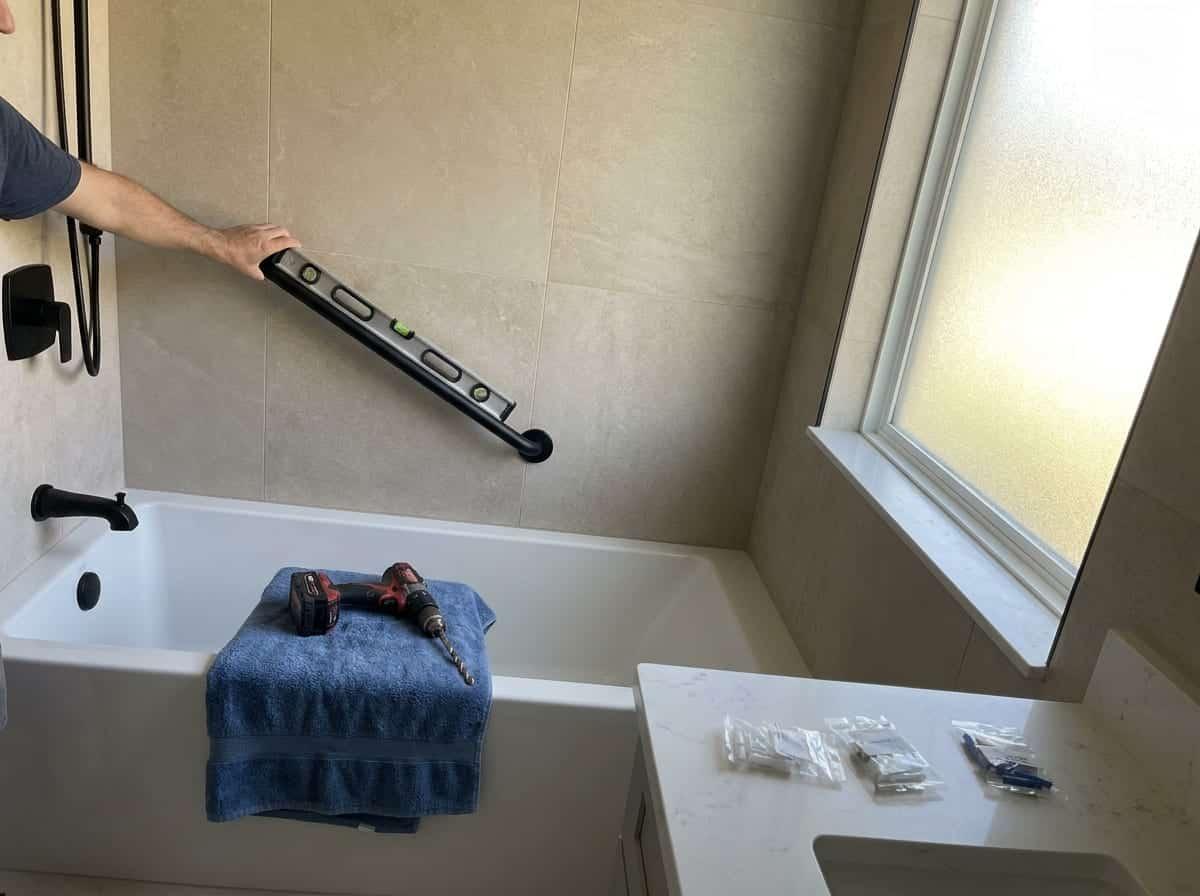
We watch where somebody actually moves, from the bed to the bathroom at night, from the car to the front door, in and out of the shower. Bars placed by a plan on paper end up in the wrong spot. Bars placed where a hand already reaches get used.
A grab bar has to carry a person's full weight in a fall, so the anchor matters more than the bar. We check whether there is block, framing, or nothing behind the tile at the exact height, and choose the fastener from that, not from what came in the box.
Bars set at the height that suits the person, anchored, and then load tested with real weight before we leave. We show the user and the family what was installed and why, and note anything else in the home worth doing later.
Palm Beach County is older than most of the country. Around a quarter of residents are sixty five or older, and a large number of one person households have a resident in that age group living alone. A great many of them are in single level condo units in communities built in the 1970s and 1980s, which is the housing stock best suited to staying put and the housing stock least equipped for it.
Bathrooms from that era have small step over tubs, glossy tile, and no blocking in the walls. Entries have a single step with no rail. Hallways are long and dim at night. None of that requires major work to fix, but all of it requires the work to be done properly, because a grab bar that pulls out of a wall is worse than no grab bar at all.
A grab bar has to hold a person's full falling weight, not their steadying weight. That is a completely different load, and it is why the plastic anchors that come in the box are not adequate for a bathroom wall in this county. Tile over block, tile over board, and framed partitions all behave differently, and the wall behind a 1980s condo shower is often a surprise.
We test at the exact height the bar is going, because a wall can have framing at one height and nothing at another. Where the wall is block, we use masonry fasteners set into the block itself. Where there is framing, we anchor into framing. Where there is neither at the right spot, we move the bar or use a proper heavy duty anchor rated for the load and then test it. Every bar we fit gets weight put on it before we leave.
Lever handles are the cheapest useful upgrade in a home. A lever opens with a forearm, an elbow, or a closed fist, which matters for arthritis, for someone carrying groceries, and for anyone whose grip is not what it was. Most homes convert in a single visit.
Non-slip treads on tile matter enormously here, because tile is the default floor across the county and it is slick when wet, which in a house with a pool and a screened patio is most of the time. Battery powered motion lights along a night route, at a bedroom door, in a hallway, at the bathroom entry, remove the fumbling that precedes most night falls, and they need no wiring at all. Anything hardwired goes to the licensed trades we refer out.
In an association building, bathroom walls sometimes back onto a shared wall or a chase, and buildings may restrict what can be anchored into them. We ask before we drill. Certificates of insurance, gate credentials or front desk access, and quiet hours for drilling get handled ahead of the visit.
The good news is that grab bars, handrails, treads, and lever handles are all inside the unit and rarely need architectural approval, unlike anything that changes a door color or the outside of the building. Most owners find the whole project easier to get through their association than they expected.
A lot of these calls come from an adult child in another state who has just visited a parent in Boca Raton or Delray Beach and noticed how they were getting in and out of the shower. We are used to that. We can walk the home, send photos of what we would recommend and where, and put a written quote in front of both the parent and the family before anything is scheduled.
Pairing safety work with a smart lock is common in the same visit, since a keypad gives a caregiver or a neighbor access without a key hidden outside and lets a family member out of state add or remove a code from their phone.
Packages that usually include this work.
Grab bars, handrails, lever handles, treads, and night lighting installed and load tested, with a written walkthrough.
Two seasonal visits a year for absent owners. Open the house in October to December, close it in April or May.
A standing program for associations and management firms: unit turns, punch lists, painting, and lock work on one monthly invoice.
We cover 39 cities, villages, and towns in Palm Beach County. These are the seven largest.
See all 39 service areasYes, and it is routine here. What matters is what is behind the tile at the exact height the bar is going, which in Palm Beach County is often block, sometimes framing, and sometimes neither. We test at that height, choose a fastener that suits, and put real weight on the finished bar before we leave.
Usually not. A grab bar has to carry a person's full falling weight, which is a much larger load than steadying yourself, and the plastic anchors packaged with most bars are not rated for that in these wall types. We supply anchors matched to the wall we find, and we load test every bar.
Lever handles and non-slip treads. Levers open with a forearm or a closed fist rather than a grip, and treads address tile floors, which are the default here and are slick whenever anyone comes in from a pool or a screened patio. Both are quick and neither needs association approval in most buildings.
We install battery powered motion lights and plug-in night lights along a night route, which need no wiring and can be moved if the route changes. Anything hardwired goes to the licensed trades we refer out. In practice the battery units solve the problem most families are actually worried about.
It is how a lot of these jobs start. We walk the unit, photograph what we would recommend and where, and send a written quote to both of you before anything is scheduled. We coordinate building access, insurance paperwork, and quiet hours with management so your parent does not have to.
Rarely, because they are inside the unit and change nothing visible from common area, unlike a door color. The exception is anchoring into a shared wall or a chase, which some buildings restrict. We ask management before drilling in those spots rather than after.
Tell us what you need done and roughly where in Palm Beach County you are. Photos help. We come back with a price, not a sales visit.